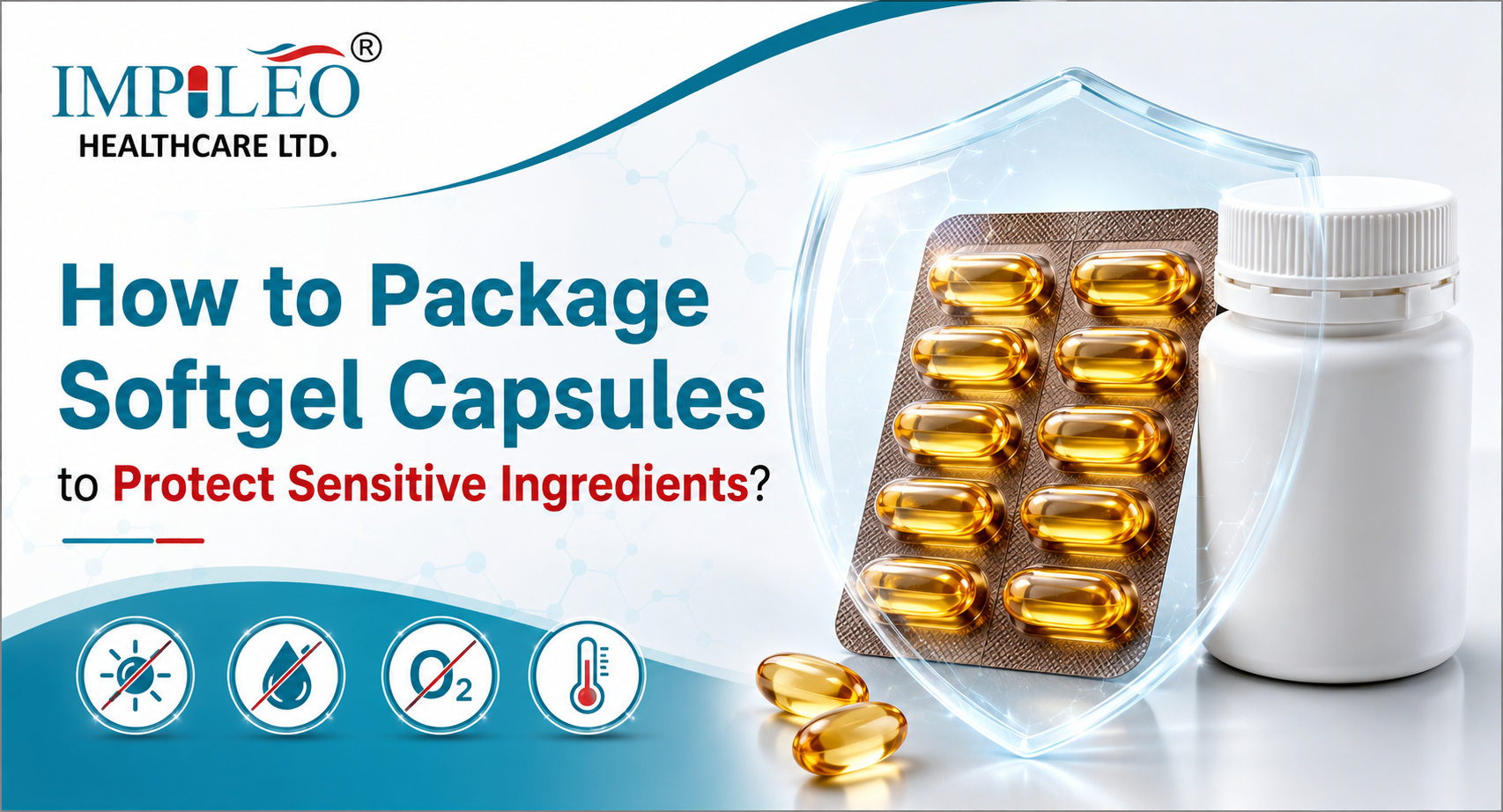
Packaging plays an important role in protecting softgel capsules from moisture, oxygen, light, heat, and physical damage. How to Package Softgel Capsules correctly depends on the sensitivity of the active ingredients, the type of capsule shell, expected storage conditions, and the required shelf life. A suitable packaging system helps maintain product quality from manufacturing and transportation through final use. FDA guidance also emphasizes that packaging should be evaluated for factors such as moisture, oxygen, light exposure, seal integrity, and compatibility.
Why Softgel Capsules Need Careful Packaging Protection?
Softgel capsules contain a gelatin or other suitable shell around a liquid, semi-solid, or suspension fill. Both the fill material and capsule shell can be affected by environmental conditions. Moisture can change the physical properties of the shell, while oxygen may affect oxidation-sensitive ingredients. Light can also reduce the stability of certain vitamins, botanical ingredients, oils, and other active compounds.
The packaging therefore needs to protect the complete dosage form rather than only the active ingredient. The interaction between the capsule shell, fill formulation, packaging material, and storage environment should be considered during development. Stability studies can help identify which environmental factors create the greatest risk for a particular product.
Choose Packaging Based on Ingredient Sensitivity
The first step is to understand what the softgel formulation needs protection from. Ingredients that are sensitive to moisture may require a strong moisture barrier, while oxidation-sensitive oils or nutrients may need better protection from oxygen. Light-sensitive ingredients may require opaque or light-resistant packaging.
A single packaging format is not ideal for every softgel product. Packaging selection should be based on stability data, formulation characteristics, expected climate, transportation conditions, and the intended shelf life. This approach helps prevent unnecessary packaging while ensuring that sensitive ingredients receive adequate protection.
Use High Barrier Materials for Moisture Protection
Moisture is one of the most important factors to consider when packaging softgel capsules. Water can move between the capsule shell and its surroundings, which can affect shell flexibility, strength, and performance. Sensitive ingredients may also experience degradation when exposed to excessive moisture.
High-barrier packaging materials can help reduce moisture transfer. Depending on the product and stability requirements, manufacturers may evaluate foil-based blisters, high-barrier films, or suitable bottles with effective closures. FDA packaging guidance specifically identifies moisture permeation as an important consideration for solid oral dosage forms.
Protect Softgels From Oxygen and Oxidation Risks
Oxygen can be a major concern for softgels containing oxidation-sensitive ingredients, particularly certain oils, vitamins, and other compounds that can react with oxygen. Oxidation may change the potency, appearance, smell, or overall quality of a product.
Packaging can reduce this risk by limiting oxygen exposure. High-barrier materials, appropriate sealing systems, reduced headspace oxygen, and controlled packaging conditions may be considered when supported by product-specific stability data. The need for oxygen protection should be determined scientifically because not every softgel formulation has the same sensitivity.
Select Light Resistant Packaging for Sensitive Ingredients
Light can affect ingredients that are sensitive to ultraviolet or visible radiation. If a formulation contains light-sensitive compounds, transparent packaging may not provide enough protection. In such cases, manufacturers can consider opaque containers, amber materials, foil-based packaging, or protective secondary packaging.
FDA guidance notes that light protection can be provided through opaque or amber containers or through an opaque secondary package such as a carton or overwrap. Photostability studies can help determine whether additional protection is necessary for a particular product.
Compare Blister and Bottle Packaging for Softgels
Blister and bottle packaging both have useful applications for softgel capsules. Blister packs can provide individual-dose protection and may offer strong barriers against moisture, oxygen, and light when appropriate materials are selected. They can also reduce repeated exposure because each capsule remains sealed until use.
Bottles can be practical for larger quantities and convenient daily use. However, opening the bottle repeatedly can expose the remaining capsules to the surrounding environment. The bottle material, closure, seal, headspace, and storage conditions therefore need careful evaluation.
The right option depends on the formulation and the required level of protection rather than simply choosing the most common package format.
Control Temperature and Humidity During Packaging
Packaging protection starts before the final package is sealed. Temperature and humidity during manufacturing, filling, storage, and transportation can affect softgel quality. Excessive heat may influence shell characteristics, while very dry conditions can cause moisture loss and brittleness.
Softgel capsules can be particularly sensitive to changes in moisture because the shell and fill can exchange water with their surroundings. USP-related information notes that moisture content can influence capsule brittleness and dosage-form stability.
For this reason, controlled packaging environments and clearly defined storage conditions can be important parts of a complete protection strategy.
Ensure Strong Seals and Reliable Package Integrity
A high-quality packaging material cannot protect a product if the package is poorly sealed. Small defects, weak seals, or improper closures can allow moisture and gases to enter the package and reduce the intended protection.
Seal integrity should therefore be evaluated during packaging development and quality control. The complete container closure system should be considered, including the container, liner, closure, seal, and any secondary protective layer. FDA guidance describes the container closure system as the combination of packaging components that work together to contain and protect the product.
Use Stability Testing to Confirm Packaging Performance
Packaging decisions should be supported by stability testing rather than assumptions. Stability studies can examine how the softgel product behaves over time under normal and accelerated conditions. Testing may evaluate potency, degradation products, appearance, leakage, dissolution, shell properties, moisture, and other relevant quality attributes.
Testing the product in its intended market packaging is particularly important because changing the container or closure can change the protection provided to the product. FDA information notes that moving a dosage form into a different storage system can affect shelf life when the new package provides different protection.
Follow Good Packaging Practices During Manufacturing
Good packaging practices help maintain product quality after manufacturing. Softgels should be handled carefully to avoid punctures, cracks, sticking, deformation, and leakage. Packaging equipment should be properly controlled, and packaging components should meet established specifications.
Impileo Healthcare Ltd. can support pharmaceutical and nutraceutical manufacturers by focusing on quality-oriented manufacturing and packaging practices suited to different formulations and product requirements. The packaging strategy should always be matched to the specific formulation rather than using the same approach for every softgel product.
How to Build a Better Softgel Packaging Strategy
A practical packaging strategy starts by identifying the main risks to the formulation. Manufacturers should determine whether moisture, oxygen, light, temperature, mechanical damage, or repeated opening is the biggest concern. The next step is to select suitable packaging materials and closures that address those risks.
The complete package should then be evaluated through stability and packaging performance studies. This process can help establish whether the selected packaging provides enough protection throughout the intended shelf life. It also helps manufacturers make informed decisions about storage instructions, transportation requirements, and package design.
Frequently Asked Questions
What is the best packaging for softgel capsules?
High-barrier blister packs and suitable bottles can protect softgels from moisture, oxygen, and light.
How do you protect softgels from moisture?
Use moisture-resistant packaging and store capsules under recommended temperature and humidity conditions.
Can light damage softgel ingredients?
Yes. Light-sensitive ingredients may require opaque, amber, or foil-based packaging.
How can softgels be protected from oxidation?
Use oxygen-resistant packaging and strong seals to reduce exposure to air.
Why is stability testing important?
It confirms whether the packaging can protect the softgel product throughout its intended shelf life.