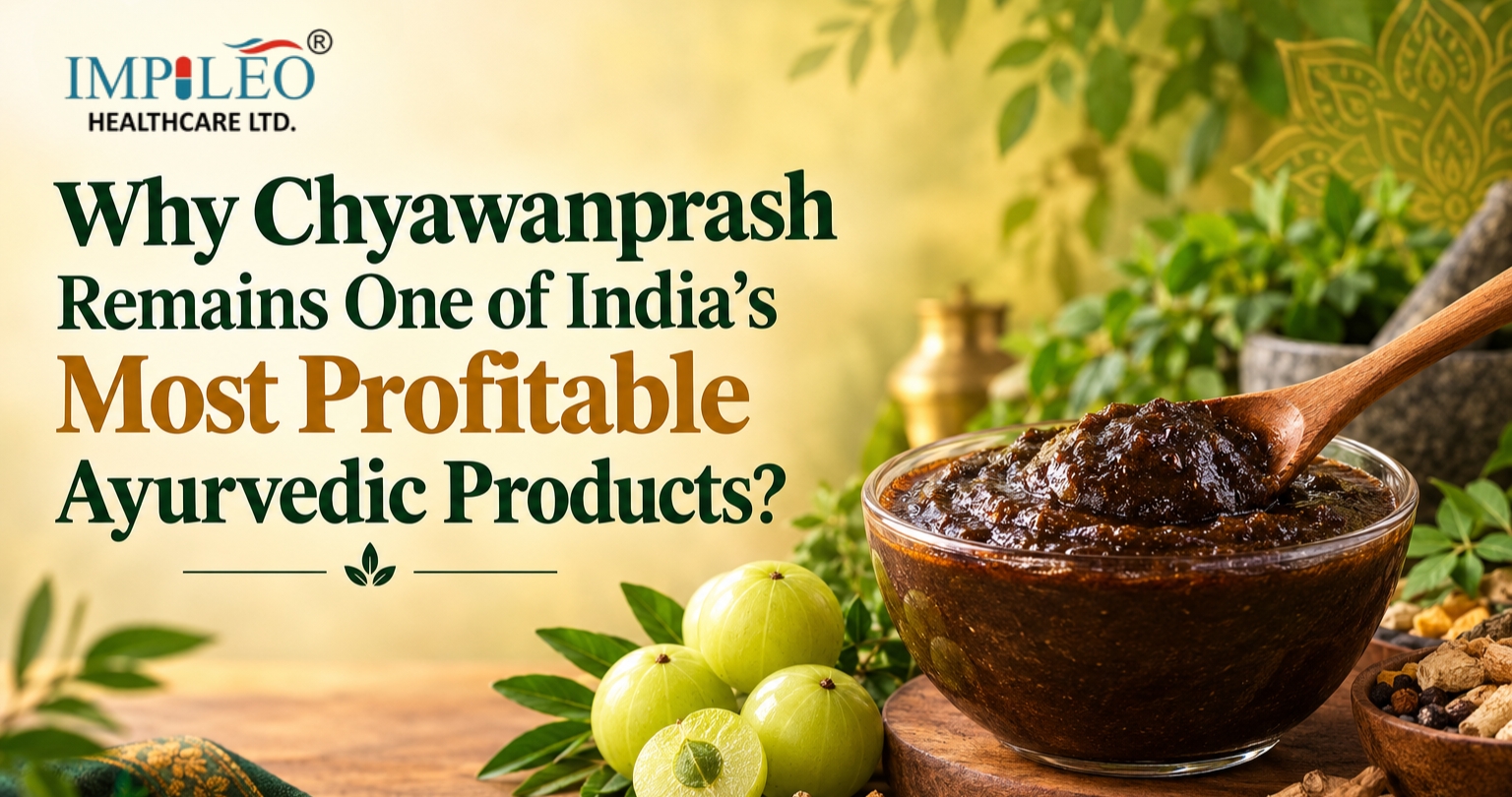
India’s growing interest in traditional wellness products has created opportunities for businesses in the herbal and Ayurvedic sectors. Among these products, Chyawanprash remains one of India’s most profitable Ayurvedic products because of its long-standing cultural acceptance, established consumer demand, flexible pricing, and potential for repeat purchases. For pharmaceutical entrepreneurs, wellness brands, and distributors, it represents a product category worth evaluating when planning an Ayurvedic product portfolio.
Chyawanprash is a traditional herbal formulation commonly prepared with amla, herbs, spices, and other ingredients. It is widely marketed as a daily wellness product, particularly during seasonal changes. Its familiarity among Indian households gives businesses a starting point for building consumer trust, although profitability still depends on product quality, pricing, distribution, competition, and effective marketing.
For businesses planning to enter the Ayurvedic market, understanding why Chyawanprash continues to attract customers can help identify opportunities for product development and brand growth.
What Makes Chyawanprash a Popular Ayurvedic Product?
Chyawanprash has a distinctive position in India’s traditional wellness market. Unlike unfamiliar formulations that require extensive consumer education, it is already recognised by many consumers across different age groups.
This familiarity can reduce the effort needed to introduce the product, particularly when a new brand offers clear product information, consistent quality, and competitive pricing.
1. Strong Consumer Familiarity and Market Acceptance
Many Indian families have incorporated Chyawanprash into their seasonal or daily wellness routines. Its traditional association with Ayurveda makes it familiar to consumers who prefer herbal products as part of their lifestyle.
This existing awareness can help businesses communicate product benefits and intended use more easily than they might with an entirely new product category.
However, familiarity does not guarantee sales. Consumers still compare ingredients, brand reputation, price, taste, packaging, and availability before making a purchase.
2. Potential for Repeat Purchases Throughout the Year
Chyawanprash is generally sold in jars and consumed in measured portions according to product directions. This format creates the possibility of repeat purchases when customers are satisfied with a product.
Businesses can encourage customer retention through consistent quality, convenient packaging, transparent labelling, and dependable availability.
Although demand may increase during certain seasons, brands should avoid relying entirely on seasonal sales. Building year-round awareness can help create a more balanced sales strategy.
3. Availability Across Different Price Segments
Chyawanprash can be positioned for different customer groups through variations in pack size, formulation, ingredients, and packaging.
A brand may offer a smaller jar for first-time buyers and larger packs for established customers. Premium formulations may appeal to customers who prioritise specific ingredients or distinctive product positioning.
The key is to match the price to the product’s actual value rather than assuming that a higher-priced product will automatically deliver higher profits.
Why Chyawanprash Can Be a Profitable Ayurvedic Product?
Chyawanprash can be a commercially attractive category, but its profitability depends on more than market popularity. Businesses need to understand their costs, target audience, margins, and sales channels before investing.
1. Established Demand Can Support Brand Entry
Entering an established product category offers an advantage: customers may already understand what the product is and how it fits into their wellness routines.
A new brand can differentiate itself through ingredient transparency, suitable packaging, consistent manufacturing standards, and a clear value proposition.
At the same time, established demand usually comes with competition from recognised brands. A new business needs a practical strategy for attracting customers without depending entirely on discounts.
2. Multiple Pack Sizes Create Sales Opportunities
Offering different pack sizes can help brands serve customers with different budgets and purchasing preferences.
Pack format
Potential business opportunity
Small jar
Encourages trial purchases and serves price-conscious customers
Standard jar
Provides a practical option for regular consumers
Large jar
Appeals to households that prefer buying larger quantities
Multi-pack bundle
Supports online promotions and bulk purchasing
Premium packaging
Helps position a differentiated product where demand exists
The right selection depends on customer research, shelf space, distribution costs, and expected sales volume. Packaging choices should also protect product quality and provide clear information about storage and use.
3. Third-Party Manufacturing Can Reduce Entry Barriers
Building a manufacturing facility requires investment in equipment, premises, trained staff, quality systems, and regulatory compliance. For some businesses, third-party manufacturing provides an alternative route to launching an Ayurvedic product.
Under this model, a brand works with an external manufacturer to produce products according to an agreed formulation, specification, and quality framework.
This can allow the business to concentrate on branding, distribution, customer service, and marketing rather than operating its own factory. However, minimum order quantities, manufacturing charges, packaging expenses, testing, and regulatory responsibilities must be evaluated before placing an order.
How to Choose the Right Chyawanprash Manufacturer?
Choosing a dependable manufacturing partner is essential for businesses planning to launch a Chyawanprash brand. Product consistency, ingredient sourcing, manufacturing capacity, and quality controls can influence customer satisfaction and long-term business performance.
1. Evaluate Ingredients and Formulation Quality
Before selecting a manufacturer, review the proposed formulation, ingredient specifications, sourcing practices, and product quality requirements.
Chyawanprash formulations can differ in their ingredients, proportions, sweetness, texture, and intended positioning. Businesses should ensure that product claims accurately reflect the formulation and comply with applicable regulations.
Request relevant product specifications and quality documentation before approving a formulation.
2. Check Manufacturing Standards and Compliance
A reliable manufacturing partner should maintain appropriate hygiene, documented production processes, quality checks, and traceability systems.
Ask about the manufacturer’s applicable licences, certifications, testing procedures, batch documentation, and quality-control practices. Verify certificates and regulatory permissions rather than relying solely on promotional statements.
These checks help businesses assess whether a prospective partner can meet their requirements consistently.
3. Understand Minimum Order Quantities and Costs
Minimum order quantities can affect the initial investment required to launch a new product. Large orders may reduce the cost per unit, but they can also increase inventory expenses and the risk of unsold stock.
Request a detailed quotation covering manufacturing, ingredients, packaging, labelling, testing, transportation, and other applicable charges.
Compare suppliers using the total landed cost rather than the manufacturing price alone.
How to Build a Chyawanprash Brand in a Competitive Market?
A strong product needs a clear business strategy to achieve sustainable sales. Since consumers have access to numerous Ayurvedic brands, businesses should identify what makes their offering relevant to a particular audience.
1. Define Your Target Customers Clearly
Start by identifying the consumers you want to serve. Your target audience might include households interested in traditional wellness products, existing Ayurvedic customers, or buyers seeking particular ingredient or packaging preferences.
Research their purchasing habits, preferred price ranges, common questions, and expectations. Use this information to guide product development and marketing decisions.
Avoid making unsupported assumptions about customer demand based only on the size of the overall Ayurvedic market.
2. Differentiate Through Product Positioning
A new brand does not necessarily need an entirely new formulation to establish its identity. It can differentiate itself through thoughtful packaging, transparent ingredient information, convenient pack sizes, or a clearly defined price segment.
Any claims about immunity, disease prevention, or other health outcomes must be scientifically supportable and legally permissible. Traditional use alone does not establish that a product prevents or treats a particular disease.
Clear, responsible communication helps build credibility and reduces the risk of misleading consumers.
3. Develop a Balanced Distribution Strategy
Chyawanprash brands can consider several distribution channels, depending on their resources and target audience.
Retail pharmacies: Reach customers who purchase wellness products through pharmacy outlets.
Ayurvedic stores: Connect with shoppers interested in traditional herbal formulations.
General retail: Expand access through suitable local shops and distributors.
E-commerce platforms: Reach customers beyond the immediate distribution area.
Direct-to-consumer websites: Build a direct relationship with customers and communicate product information.
Each channel has different costs, commission structures, logistics requirements, and customer acquisition challenges. Start with channels that match your budget and operational capacity, then expand based on measurable results.
How to Calculate Chyawanprash Profitability Before Launch?
Before investing in a new product, estimate whether the expected selling price can cover all business expenses and leave a reasonable margin.
For example, if a product sells for ₹200, that amount is not necessarily the revenue retained by the brand. Retailer margins, distributor commissions, taxes, promotional discounts, shipping, and other expenses may reduce the amount received.
A practical calculation should consider:
Net contribution per unit = Net sales revenue − Variable costs per unit
Variable costs may include manufacturing, packaging, freight, and channel-related charges. Fixed expenses such as salaries, marketing retainers, storage, and administration must also be considered when estimating overall profitability.
Prepare conservative, expected, and optimistic sales scenarios before committing to large production quantities. This helps identify the sales volume needed to cover costs and manage financial risk.
Why Choose Impileo Healthcare for Product Manufacturing?
Businesses entering the Ayurvedic and wellness sector need manufacturing partners that understand product consistency, quality requirements, and commercial expectations.
Impileo Healthcare Ltd., based in Dera Bassi, Punjab, offers third-party manufacturing services in the nutraceutical, herbal, and Ayurvedic product sectors. The company highlights its quality assurance and quality control processes, use of quality raw materials, and manufacturing capabilities for businesses seeking production support.
Before partnering with any manufacturer for Chyawanprash, confirm that it holds the specific licences and approvals required for the intended product category and formulation. Also verify its relevant certifications, production capabilities, testing arrangements, and applicable regulatory compliance.
Discuss your target market, formulation requirements, packaging preferences, expected order volume, and budget before finalising a manufacturing agreement.
Frequently Asked Questions About Chyawanprash
1. Why is Chyawanprash considered a profitable Ayurvedic product?
Chyawanprash has established consumer recognition, multiple packaging options, and potential for repeat purchases. However, actual profitability depends on manufacturing costs, competition, distribution expenses, pricing, and sales volume.
2. Can a new business launch its own Chyawanprash brand?
Yes. A business can explore third-party manufacturing to launch a brand without establishing its own production facility. It must still address product compliance, branding, labelling, distribution, and other applicable legal requirements.
3. What should businesses check before selecting a manufacturer?
Evaluate the manufacturer’s applicable licences, formulation capabilities, quality-control systems, ingredient sourcing, testing procedures, minimum order quantities, pricing, and delivery timelines.
4. How can a Chyawanprash brand stand out from competitors?
Brands can differentiate themselves through transparent ingredient information, suitable packaging, competitive pricing, consistent quality, and targeted distribution. All product and health-related claims should be properly substantiated.
5. Is Chyawanprash suitable for year-round sales?
It can be marketed throughout the year, depending on customer preferences and local demand. Businesses should study seasonal sales patterns, consumer feedback, and repeat-purchase behaviour before planning inventory and promotional campaigns.
Conclusion: Build Your Ayurvedic Brand With Confidence
Chyawanprash remains a commercially relevant Ayurvedic product because of its established consumer familiarity, flexible product formats, and potential for repeat purchases. However, it is not automatically profitable for every business. Success requires careful cost planning, reliable manufacturing, responsible product claims, and a distribution strategy suited to the target market.
For businesses planning to enter the Ayurvedic wellness sector, selecting the right manufacturing partner is an important first step.
Ready to develop your own Ayurvedic product portfolio? Contact Impileo Healthcare Ltd. to discuss your third-party manufacturing requirements, explore suitable product options, and plan your next business opportunity.