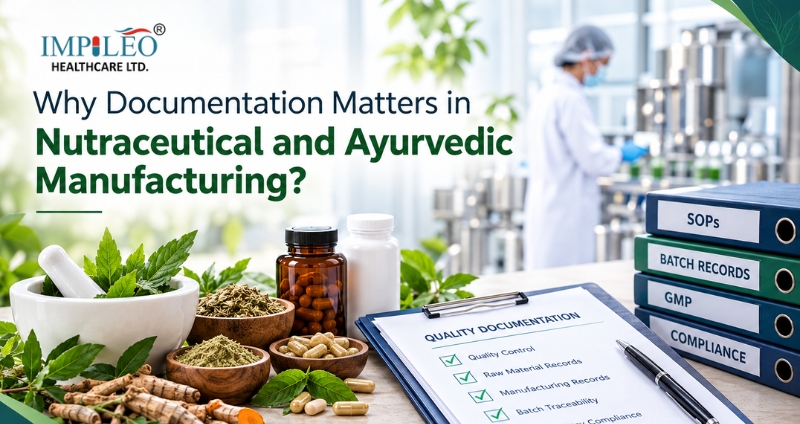
In Nutraceutical and Ayurvedic Manufacturing, documentation plays a critical role in maintaining product quality, consistency, traceability, and regulatory compliance. From raw material records and manufacturing processes to quality testing and finished-product release, accurate documentation creates a clear record of how a product is developed and manufactured. For brands working with a third-party manufacturer, proper documentation also helps establish transparency and confidence throughout the production cycle.
Nutraceutical and Ayurvedic products may contain multiple ingredients, botanical extracts, vitamins, minerals, or other functional components. Managing these ingredients consistently requires more than a well-designed formulation. Every important manufacturing activity needs to be recorded, reviewed, and controlled.
For this reason, documentation is not simply administrative paperwork. It is an important part of a structured quality management system.
What Does Documentation Mean in Manufacturing?
Manufacturing documentation refers to the records created and maintained throughout the product lifecycle. These records can cover raw materials, formulations, production activities, testing, packaging, storage, and product release.
Documentation provides evidence that defined procedures have been followed. It can also help manufacturing teams identify deviations, investigate quality concerns, maintain traceability, and improve production practices.
In nutraceutical and Ayurvedic manufacturing, documentation may include:
Raw material specifications and supplier records
Certificates of analysis and testing records
Approved product formulations
Batch manufacturing records
Standard operating procedures
In-process quality checks
Finished-product testing reports
Packaging and labelling records
Cleaning and sanitation records
Storage and inventory records
Batch release documentation
Deviation and corrective action records
Maintaining these records systematically helps connect each stage of manufacturing with the next.
Why Accurate Records Matter for Product Quality?
Product quality depends on consistency. A formulation may contain several ingredients, and each ingredient must meet defined quality requirements before being used in production.
Documentation helps establish what materials were received, which batches were used, what manufacturing steps were followed, and what testing was completed.
If a quality concern occurs, documented information can help the relevant team trace the product back through the manufacturing process. Without reliable records, identifying the source of a problem can become significantly more difficult.
Accurate records therefore support both routine quality control and investigations when unexpected issues arise.
Documentation Supports Raw Material Traceability
Raw materials are an important part of nutraceutical and Ayurvedic products. Botanical ingredients, herbal extracts, vitamins, minerals, and other components may have different specifications and quality characteristics.
Proper documentation creates a traceable record for each material entering the manufacturing process.
For example, records can help identify:
Material name and specification
Supplier information
Batch or lot number
Quantity received
Testing status
Approval or rejection status
Date of receipt
Storage conditions where applicable
This information allows manufacturers to track materials from receipt through production.
Traceability becomes particularly important when products contain multiple ingredients sourced from different suppliers.
How Batch Records Improve Manufacturing Control?
A batch manufacturing record documents how a particular batch was produced. It can include details about the materials used, quantities, processing steps, equipment, production conditions, and in-process checks.
These records help manufacturing teams confirm that production followed the approved process.
A simplified view of documentation across a batch may look like this:
Manufacturing Stage
Typical Documentation
Main Purpose
Raw material receipt
Material and supplier records
Traceability
Material testing
Test reports and specifications
Quality verification
Production
Batch manufacturing records
Process control
In-process checks
Inspection and testing records
Consistency
Packaging
Packaging records
Correct identification
Finished product
Quality testing records
Product verification
Product release
Review and approval records
Release control
The exact records required can vary according to the product, manufacturing process, applicable standards, and quality system.
Why Documentation Matters in Ayurvedic Manufacturing?
Ayurvedic manufacturing can involve herbs, botanical ingredients, extracts, powders, oils, and other traditional ingredients. Their quality can be influenced by factors such as source, processing, storage, and handling.
Documentation helps manufacturers establish greater control over these variables.
Records can provide information about the identity and quality requirements of ingredients, manufacturing procedures, processing stages, and testing activities.
For Ayurvedic products, clear documentation can also support consistency between batches. This is important because manufacturers need to follow defined processes rather than relying solely on individual experience or informal instructions.
A documented process gives production and quality teams a common reference point.
Documentation Helps Maintain Process Consistency
Consistency is particularly important for third-party manufacturing. A brand expects its products to maintain their intended quality from one production batch to another.
Standard operating procedures and manufacturing records help employees follow established processes consistently.
Documentation can specify how activities should be performed, what checks should be completed, and what information should be recorded.
When procedures are clearly documented, manufacturing teams have a structured reference for routine activities. This can reduce the risk of missed steps and support more consistent production practices.
How QA and QC Teams Use Manufacturing Records?
Quality Assurance (QA) and Quality Control (QC) have different but connected responsibilities within a manufacturing environment.
QC activities generally involve testing and checking materials, products, and processes against defined requirements. QA focuses more broadly on systems, procedures, compliance, and overall quality management.
Documentation supports both functions.
QA teams may review procedures, records, deviations, and corrective actions, while QC teams may use testing records, specifications, and batch information during quality assessments.
Together, these records help create an evidence-based approach to quality management.
Manufacturing processes can sometimes experience deviations or unexpected results. When this happens, documentation provides valuable information for investigation.
For example, if a batch does not meet an established specification, relevant records may help the quality team examine:
Which raw material batches were used
Whether the approved formulation was followed
Which equipment was involved
Whether process parameters were recorded correctly
What in-process checks were completed
What finished-product testing showed
Whether similar deviations occurred previously
The goal is not simply to identify what went wrong. A structured investigation can also help determine appropriate corrective or preventive actions.
How Documentation Supports Third-Party Manufacturing?
For brands using third-party nutraceutical manufacturing services, documentation provides an important link between the brand and manufacturer.
The brand may not be directly involved in day-to-day production, so documented information can provide visibility into important manufacturing and quality activities.
A reliable manufacturing partner should have structured processes for maintaining relevant records and communicating quality information.
For Impileo Healthcare Ltd., documentation works alongside quality-focused manufacturing practices and the supervision of QA and QC teams. The company manufactures nutraceutical, herbal, and Ayurvedic products using defined processes designed to support consistency and compliance.
Documentation Supports Regulatory Compliance and Audits
Manufacturing facilities may need to demonstrate that their processes, quality systems, and products are being managed according to applicable requirements.
Well-maintained documentation can provide evidence during internal reviews, customer assessments, quality audits, and other applicable inspections.
Records should be accurate, appropriately maintained, and accessible to authorized personnel.
Poor documentation can create uncertainty even when a manufacturing process itself has been performed correctly. Conversely, complete records provide evidence of what was actually done.
This is why documentation is an important part of a mature manufacturing quality system.
What Makes Manufacturing Documentation Effective?
Simply creating more documents does not automatically create better quality control. Documentation should be useful, accurate, controlled, and maintained properly.
Effective manufacturing documentation generally has several characteristics:
Accuracy: Information should correctly represent the activity performed.
Clarity: Records should be understandable to authorized users.
Consistency: Similar processes should be documented using controlled procedures and formats.
Traceability: Records should allow relevant materials, batches, and activities to be connected.
Timeliness: Information should be recorded at the appropriate stage rather than reconstructed later.
Control: Documents should be reviewed, approved, updated, and maintained through an appropriate document-control system.
These principles make documentation more useful for both routine manufacturing and quality investigations.
For healthcare brands, documentation can provide greater visibility into manufacturing and quality processes.
It can help brands understand how their products are produced, verify relevant quality information, and maintain appropriate records for their own business and quality requirements.
Documentation can also support communication between manufacturers, quality teams, regulatory professionals, and brand representatives.
For a growing nutraceutical or Ayurvedic brand, working with a manufacturer that takes documentation seriously can therefore be an important part of establishing a dependable manufacturing relationship.
The Role of Documentation in Better Manufacturing
Documentation connects people, processes, materials, testing, and quality decisions. It creates a structured history of manufacturing activities and provides evidence that defined procedures have been followed.
In Nutraceutical and Ayurvedic Manufacturing, this becomes particularly valuable because products may involve diverse ingredients, specialized formulations, multiple processing stages, and strict quality expectations.
From raw material receipt to finished-product release, every stage contributes to the final product. Proper documentation helps manufacturers maintain visibility across these stages while supporting traceability, consistency, quality control, and compliance.
For brands looking for a dependable third-party manufacturing partner, understanding a manufacturer’s documentation and quality systems can be just as important as evaluating its product range and production capabilities.
Choose a Quality-Focused Manufacturing Partner
The quality of a nutraceutical or Ayurvedic product depends on more than its formulation. Strong manufacturing processes, controlled procedures, testing, traceability, and accurate documentation all contribute to a structured quality system.
Impileo Healthcare Ltd. combines nutraceutical, herbal, and Ayurvedic manufacturing capabilities with dedicated QA and QC oversight. With ISO, GMP, and WHO certifications, the company focuses on maintaining quality and consistency across its manufacturing operations.
If you are planning to develop or expand a nutraceutical, herbal, or Ayurvedic product range, connect with Impileo Healthcare Ltd. to discuss your third-party manufacturing requirements and explore suitable manufacturing solutions for your brand.
Frequently Asked Questions
1. Why is documentation important in nutraceutical manufacturing?
Documentation helps maintain traceability, consistency, quality control, and process accountability. It records important activities such as raw material receipt, production, testing, packaging, and product release.
2. What records are maintained during nutraceutical manufacturing?
Records can include raw material documents, specifications, certificates of analysis, batch manufacturing records, testing reports, packaging records, standard operating procedures, and product release documentation.
3. How does documentation support Ayurvedic product quality?
Documentation helps manufacturers maintain defined procedures for ingredients, processing, testing, and quality checks. It can also support traceability and consistency between different production batches.
4. How does documentation help third-party manufacturing brands?
It provides greater visibility into manufacturing activities and quality processes. Proper records can help brands review relevant production and testing information while supporting communication with their manufacturing partner.
5. Can documentation help identify the cause of a manufacturing problem?
Yes. Manufacturing records can provide information about raw materials, production steps, equipment, testing, and deviations. This information can support structured investigations when a quality issue occurs.